The tent that gets scanned when the bill lands.

The end of the meal is the moment a diner is seated, satisfied and holding a phone while the bill is on its way. A tent on the table is there before anyone has to remember to ask.

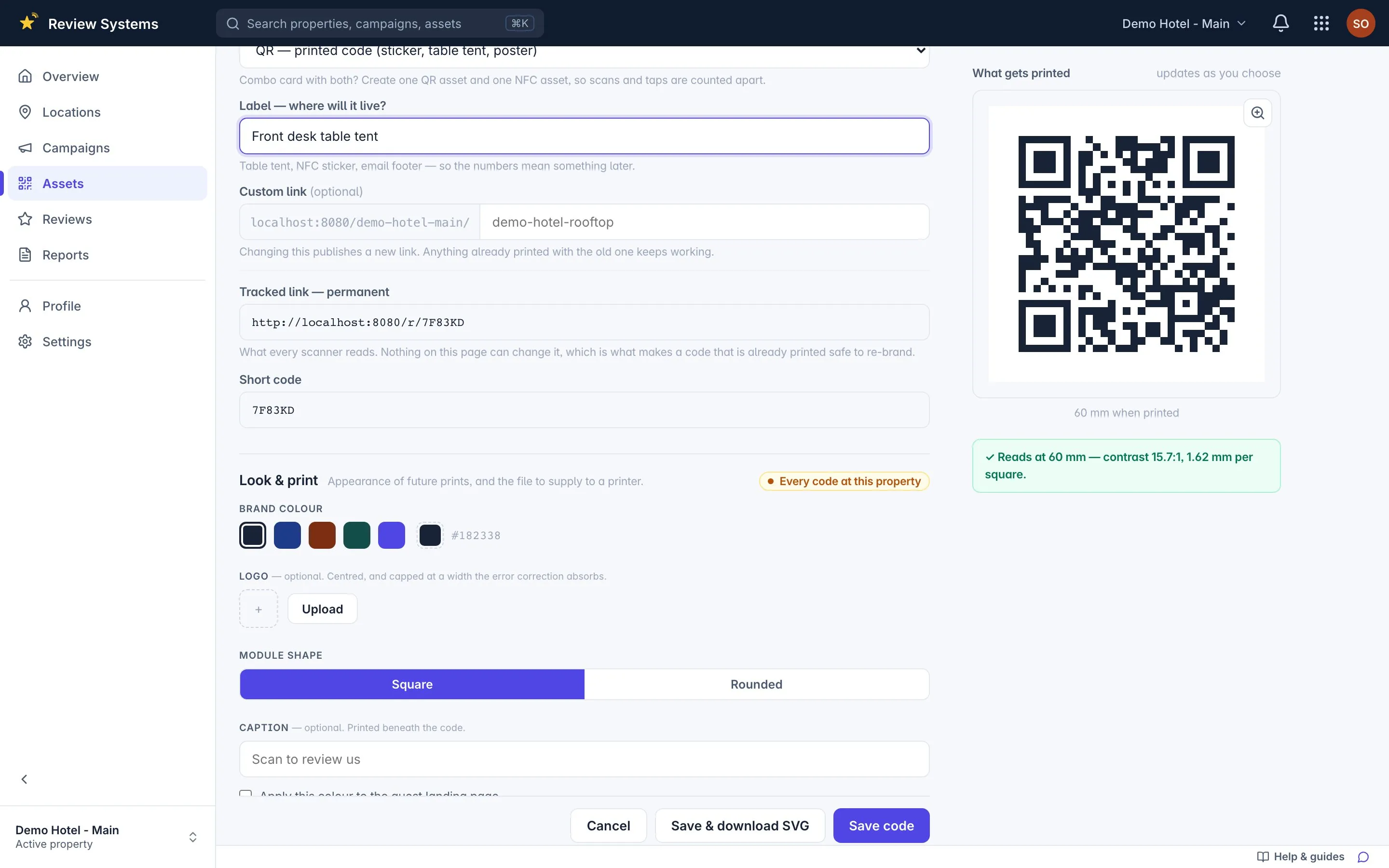
60 mm table tent · QR to scan, NFC to tap · one code for this spot

Live demo — tap a button

Three steps. Fifteen minutes.

  1. QR panel: 25 mm sticker, 60 mm table tent, 150 mm poster — SVG, PNG, PDF
    Sample data

    Print the 60 mm table tent

    Create the spot "Restaurant", add a code and export SVG, PNG or print-ready PDF. Scan it once with your own phone before the print run.

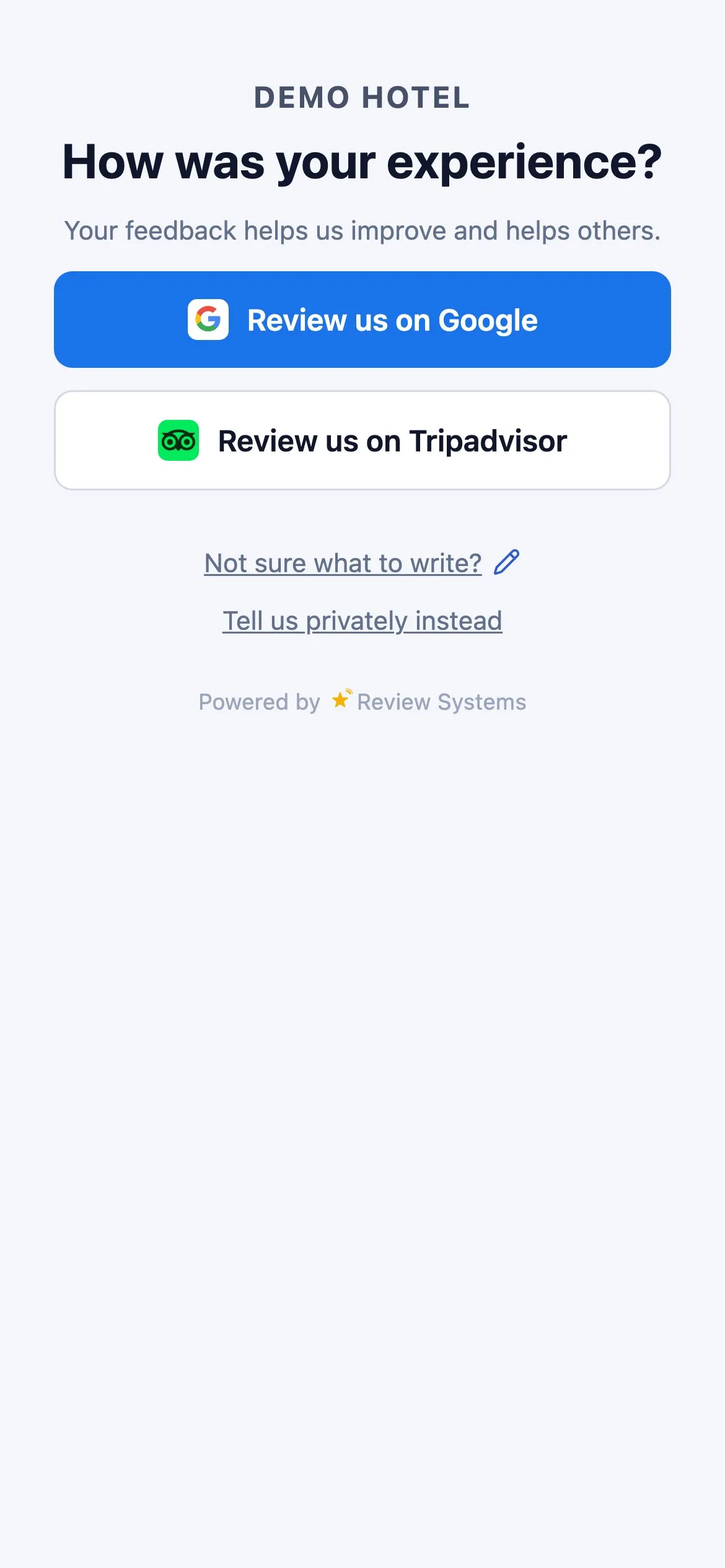
  2. The guest page, card layout: Google, Tripadvisor and a private word to the manager
    Sample data

    Put it where the phone already is

    Stand a 60 mm tent on every table, facing the seats rather than the aisle, with the purpose written on it — "Two taps to tell us how the meal was" — and have the server touch it once while setting down the bill.

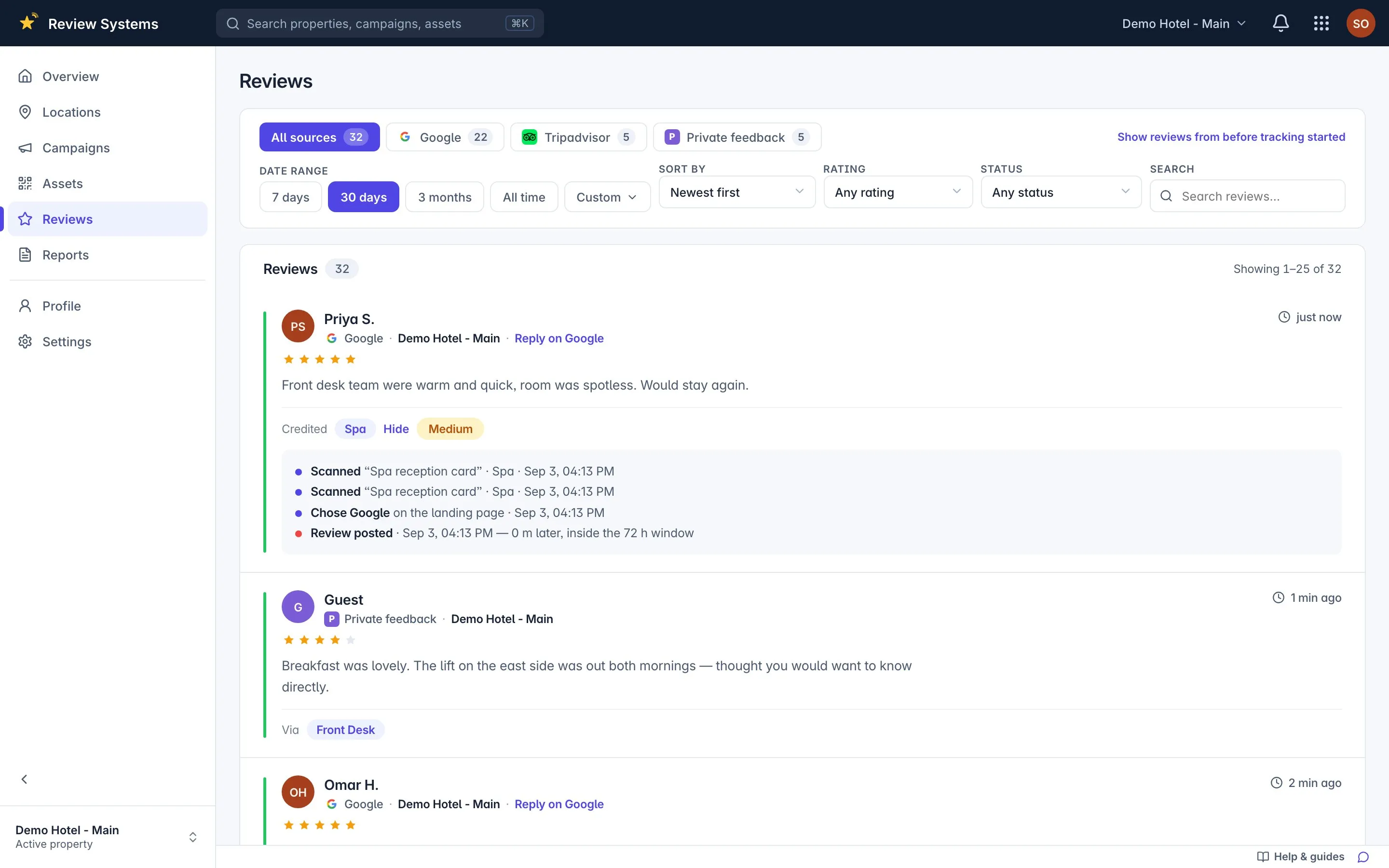
  3. A review with its scan → click → review attribution trail
    Sample data

    Reviews land, credited to Restaurant

    Every scan or tap is logged to this spot, and the review that follows is matched to it with the confidence stated.

Why a code at the restaurant table?

A restaurant table is the spot where the phone is already out and the diner has just finished the thing they might review, which is why a table tent is the first code most restaurants print and the one every other spot is measured against. In Review Systems the tables share one campaign — Restaurant — so forty tents produce one row on the leaderboard beside the counter, the bar and the terrace, which is enough to know whether the tents work without tracking each table. A diner who scans lands on the same branded page as everywhere else: a Google review, a Tripadvisor review, or a private message to the owner, with every button visible at every rating. The tent asks for nothing but a moment; the server's one sentence with the bill is what turns it into an invitation. If the row goes quiet for seven days the idle-code notification fires, and the tents have usually been cleared with the tablecloths.

Why the table first

The diner has just eaten the thing they might write about, they are seated, the phone is out to split the bill, and a server is about to walk over with a reason to say one sentence. Forty tents on forty tables produce a scan-to-review rate within a fortnight, and the counter, the bar and the terrace can be read against it.

What to print

Item Size Where Why
Table tent 60 mm Every table, facing the seats On the table for the whole meal
Sticker 25 mm Inside the bill folder Where the phone comes out to pay
NFC tag Coin Under the tent’s base or the condiment tray A tap for diners who never scan

All three live in the Restaurant spot (a campaign, in the product). Write the purpose on the tent: a bare square of black and white is a puzzle.

What the server says

“There is a code on the tent if you would like to leave us a review.” Touch the tent, walk away. Never ask for a rating, never suggest what to write, never ask for a name; the diner chooses what to say, and the helper on the page is there if they are stuck for words.

What you will see

Reviews credited to Restaurant appear on the leaderboard beside the counter and the bar, each with its trail. If the row goes quiet for seven days, the tents were probably cleared with the tablecloths.
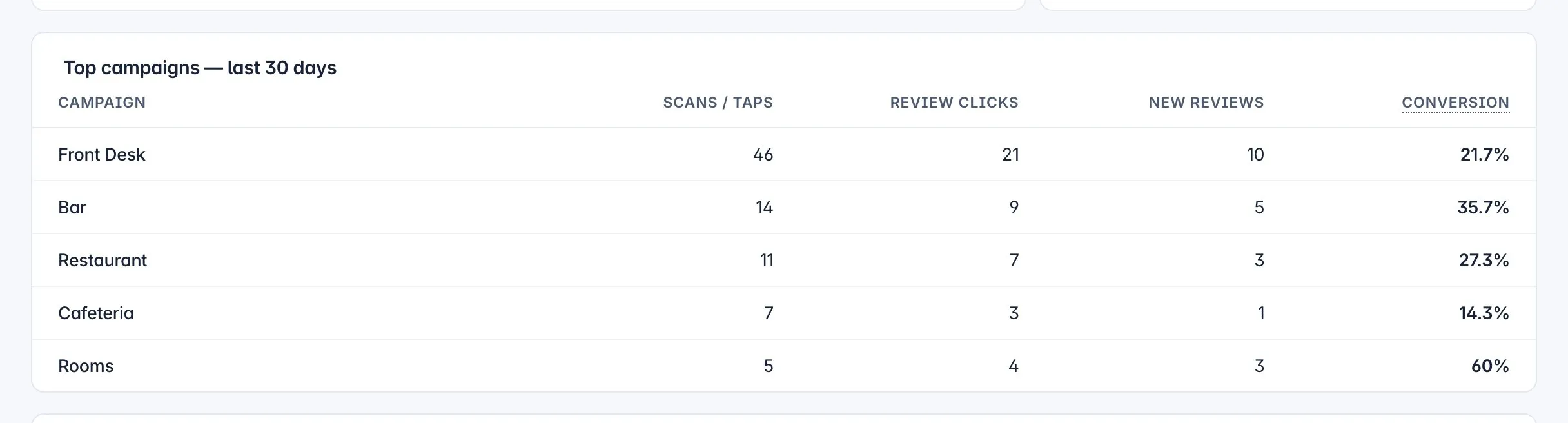
The restaurant table against the other spots.

Scans, taps, reviews credited and conversion, side by side. Move the paper that is not working; print more of the paper that is.

Top campaigns leaderboard — the bar card against the room card
Sample data

Common questions

One campaign for all tables, or one per table?

One campaign for all tables, one tent per table. The leaderboard then shows Restaurant as a single row against the counter, the bar and the terrace, which is the comparison that matters. If you want to test two tent designs or two sections, make two campaigns — Window and Back Room — and let the numbers decide.

Table tent or a sticker in the bill folder?

The tent, first. It is on the table for the whole meal and readable from any seat, so it works even when the server forgets. A 25 mm sticker inside the bill folder is a good second code in the same campaign for tables where the tent gets moved. Skip the poster by the door; nobody has a phone out at the door.

What should the server say?

One sentence while setting down the bill: "There is a code on the tent if you would like to leave us a review." Touching the tent matters more than the wording. Never ask for a rating, a star count or a mention of anyone — the invitation is the whole ask, and Google's policy is clear about the rest.

What if diners pay at the counter, not at the table?

Then the ask should follow the diner. Keep the tents, and add a Counter campaign with a sticker on the card machine or a small tent by the till. Within a month the leaderboard tells you which of the two spots is actually earning the reviews, and you print more of that one.

Read the full FAQ → or contact us

Print one code today.

Add your property, print a code for one spot, and watch the first review land credited.