The front desk asks every departing guest.

Check-out is the one moment every guest stands still with a phone in hand and a person in front of them. That is where the front desk code earns its place.

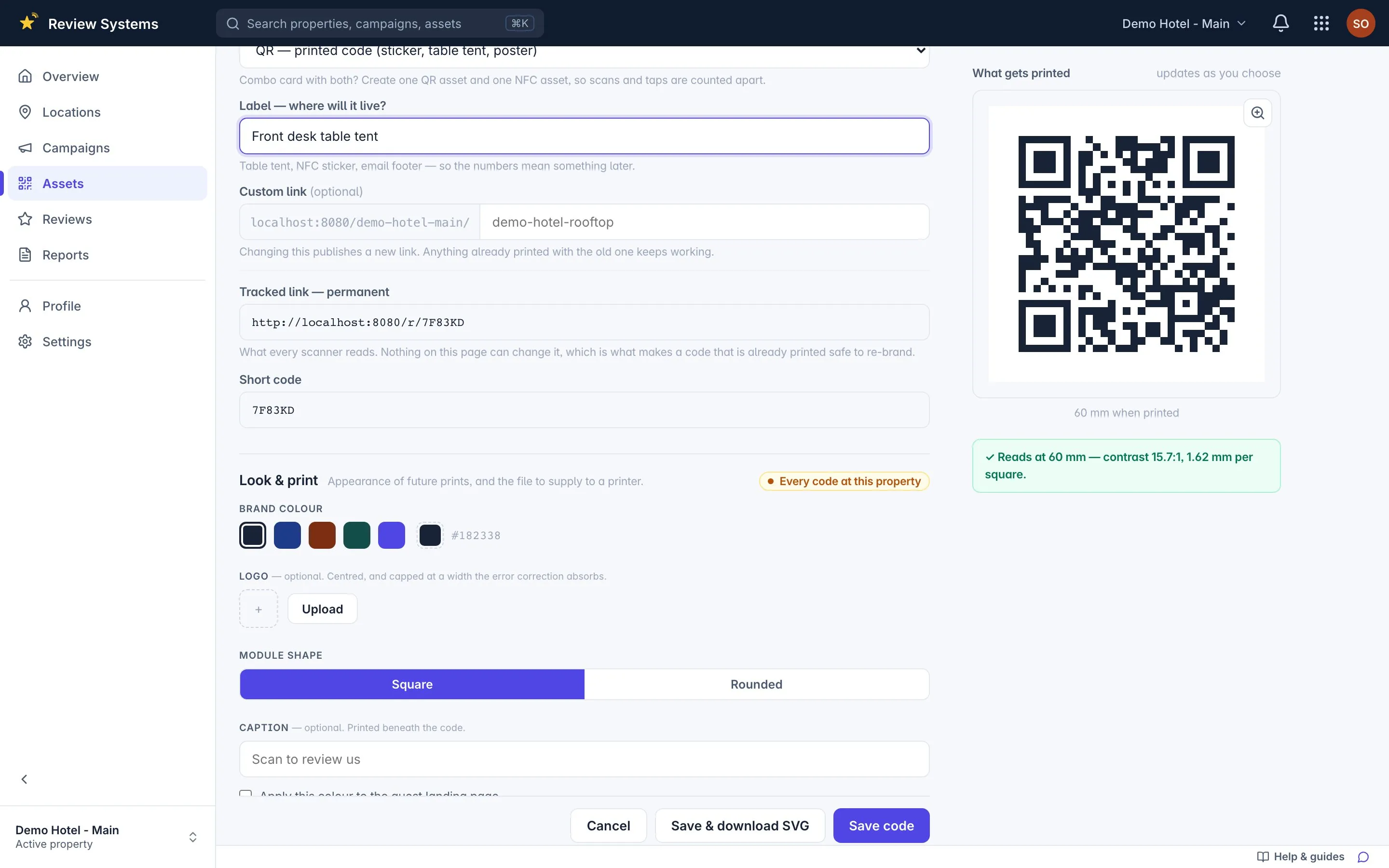
60 mm table tent · QR to scan, NFC to tap · one code for this spot

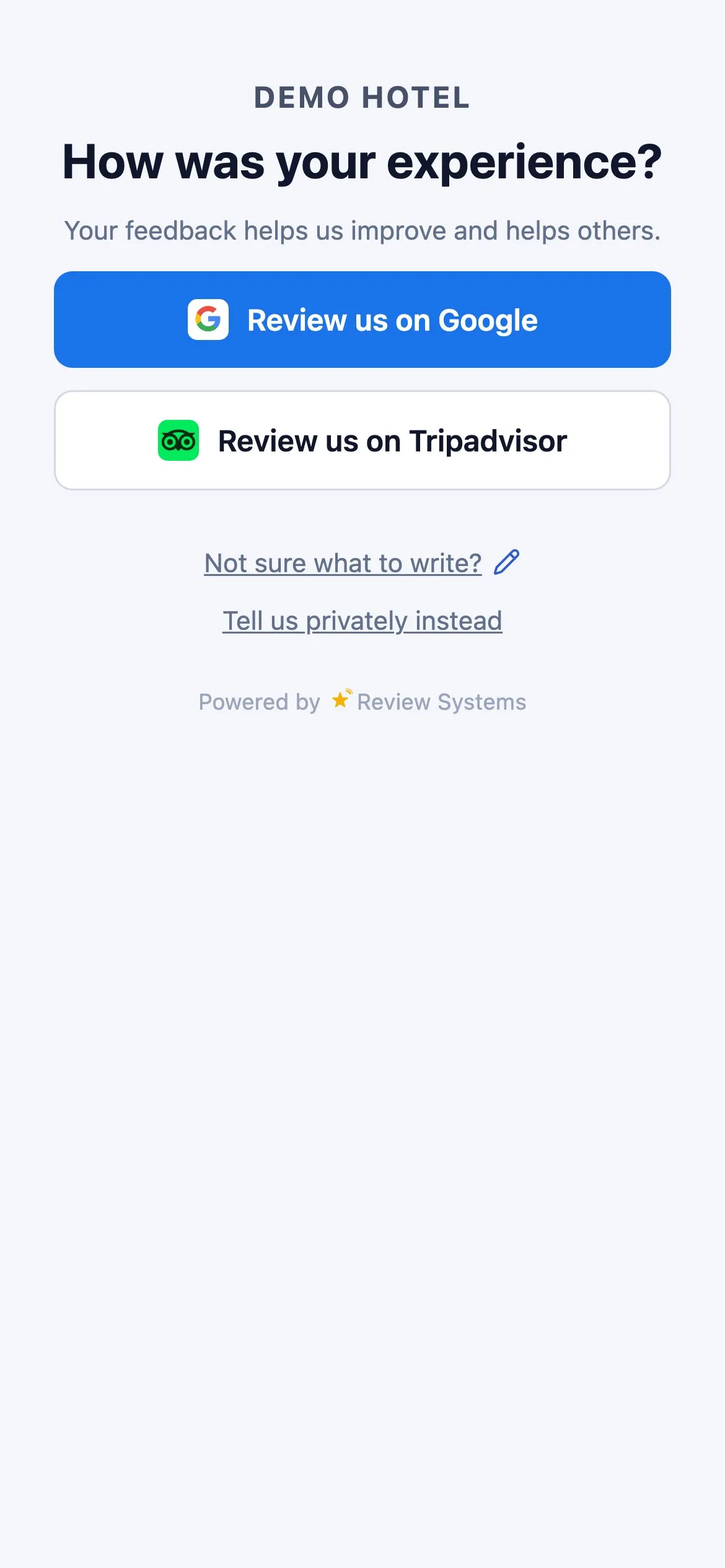
Live demo — tap a button

Three steps. Fifteen minutes.

  1. QR panel: 25 mm sticker, 60 mm table tent, 150 mm poster — SVG, PNG, PDF
    Sample data

    Print the 60 mm table tent

    Create the spot "Front Desk", add a code and export SVG, PNG or print-ready PDF. Scan it once with your own phone before the print run.

  2. The guest page, card layout: Google, Tripadvisor and a private word to the manager
    Sample data

    Put it where the phone already is

    Stand the tent at the check-out position, angled toward the guest, with the purpose written on it — "Two taps to leave us a review" — and have the receptionist point at it while handing back the card.

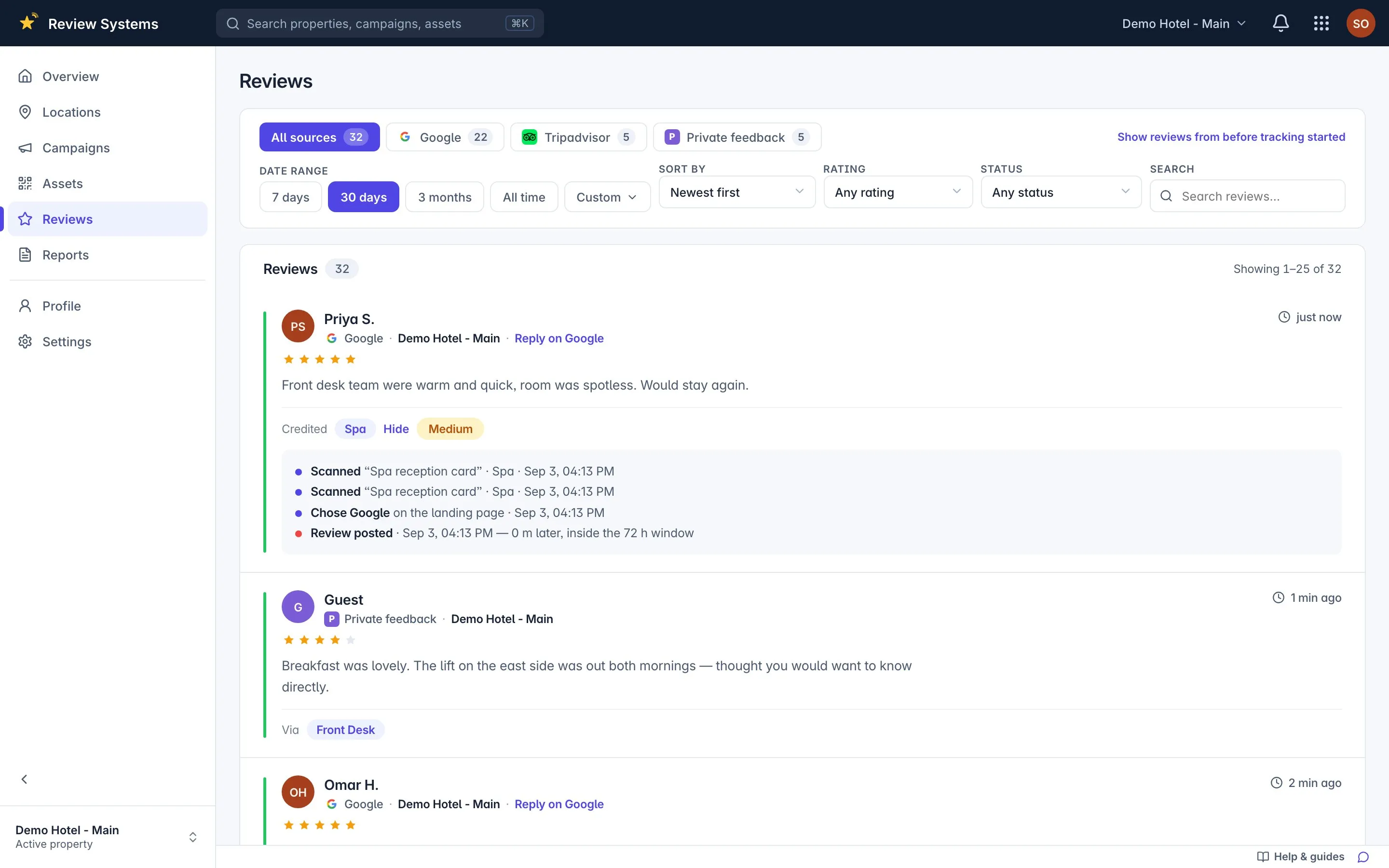
  3. A review with its scan → click → review attribution trail
    Sample data

    Reviews land, credited to Front Desk

    Every scan or tap is logged to this spot, and the review that follows is matched to it with the confidence stated.

Why a code at the front desk?

The front desk is the highest-traffic spot in a hotel and the only one where a staff member is always present, which is why it is usually the first code a property prints and the one used to calibrate the others. In Review Systems the front desk is its own campaign: its table tent, counter sticker or NFC tag has its own tracked code, and reviews credited to it appear on the leaderboard beside the bar, the restaurant and the rooms. A guest who scans or taps lands on the same branded page as everywhere else — a Google review, a Tripadvisor review, or a private message to the manager, with every button visible at every rating. Because the desk sees every departing guest, its scan-to-review rate becomes the baseline: a spot that beats it is placed well, a spot far below it is probably in the wrong place, and the idle-code notification says so after seven quiet days.

Why the desk first

Every guest passes it, a staff member is always there, and the guest is holding a phone while waiting for a receipt, a card or a taxi. No other spot in the building meets all three at once. Within two weeks the desk has a scan-to-review rate, and every other code in the hotel can be read against it.

What to print

Item Size Where Why
Table tent 60 mm Check-out position, angled to the guest Readable standing; moves with the desk layout
NFC tag Coin Under the counter’s front edge A tap for guests who never scan
Counter sticker 25 mm Card machine or receipt printer Where the eyes already are during payment

Export the file from the Front Desk spot (a campaign, in the product), scan it once with your own phone, then order the print run. Reprinting is the expensive step.

What you will see

Reviews credited to Front Desk appear on the leaderboard with their scans, taps and conversion, and each one carries its trail. If the desk goes quiet for seven days the idle-code notification fires; usually the tent has been moved.
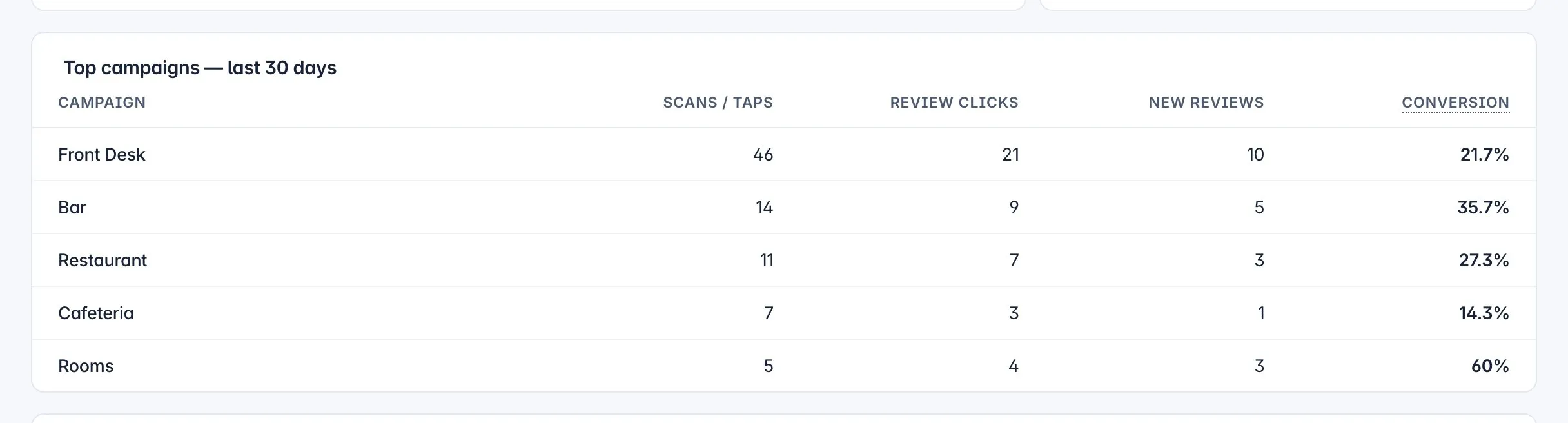
The front desk against the other spots.

Scans, taps, reviews credited and conversion, side by side. Move the paper that is not working; print more of the paper that is.

Top campaigns leaderboard — the bar card against the room card
Sample data

Common questions

Table tent, sticker or NFC tag at the desk?

A 60 mm table tent, angled toward the guest, is the reliable default: it is readable from a standing position and survives being moved. Add an NFC tag under the counter edge for guests who prefer a tap. Skip the 25 mm sticker at the desk — it is for menus and key cards.

What should the receptionist say?

One sentence while handing back the key card or receipt: "If you have a moment, there is a code on the desk — two taps to leave us a review." Pointing at the tent matters more than the wording. Never ask for a rating or a specific sentence; the invitation is the whole ask.

Should the front desk code be the same as the room card code?

No. Give each spot its own campaign and its own code, or you lose the comparison. The whole point of the front desk code is to have a baseline the room card and the bar coaster can be measured against.

What if guests check out in a hurry?

Then the desk will show it: scans per departing guest will be lower than at the bar or breakfast, and that is a real finding. Move the ask to the moment they wait — the printed receipt, the luggage hold, the taxi queue — and create a spot for it.

Read the full FAQ → or contact us

Print one code today.

Add your property, print a code for one spot, and watch the first review land credited.