What Google’s code does well
It is free, it is official, and it opens the review form with nothing in between. For a single-location business with one counter, it may be all you need. Google’s own help page also settles the policy question for everyone: asking customers to scan a code is explicitly allowed.
What it cannot tell you
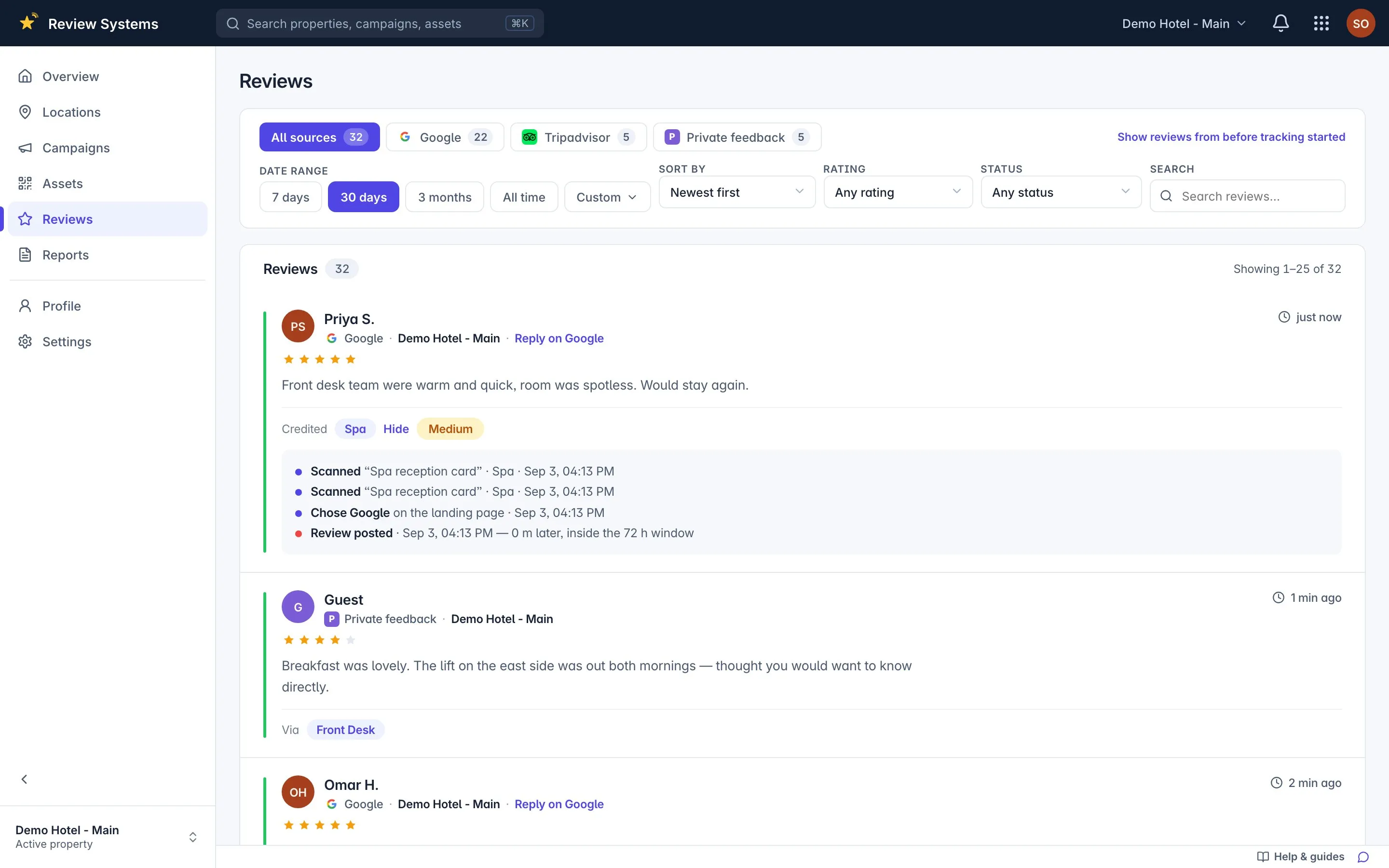
One code per listing means one number per listing. Put the same code on a poster, a coaster and a key card and you will never learn which of the three did the work. When the number drops you cannot tell whether the coaster moved or the poster peeled.
Review Systems gives each spot its own code and its own row. A review that appears on Google within the spot’s attribution window is matched to the scan before it, with the confidence stated: one matching click is High, several is Medium, a scan without a click is Low, and a review nobody scanned for is Unattributed.
What it cannot offer the guest
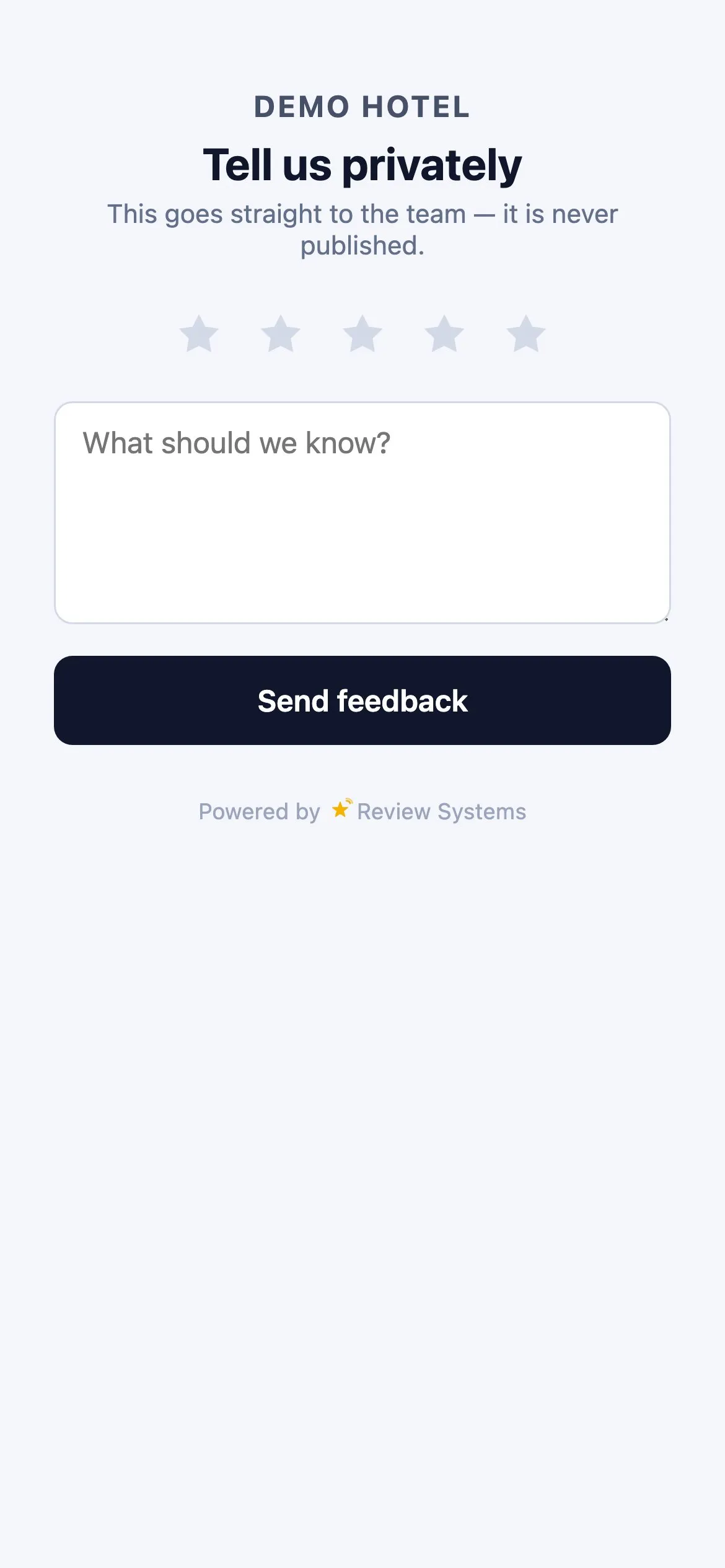
Google’s code has one destination. A guest who had a bad night and would rather tell the manager than the internet has nowhere to go but the public form or the exit. Review Systems keeps every public button on the page at every rating and adds a quiet “Tell us privately instead” link that reaches the manager and never a listing.
Tripadvisor is the other absence. For a hotel, Tripadvisor’s Popularity Ranking is computed from quality, recency and quantity of reviews; a page that offers Google and Tripadvisor side by side lets the guest pick the one they already use.
The honest test
Count your spots. One counter: take Google’s code. A front desk, a bar, a breakfast room and eighty room cards: you have a comparison worth making, and Review Systems is the tool that makes it.

 ChatGPT
 Perplexity
 Claude
 Gemini · Google AI Mode
 Reddit
 X
X